 Urgala
Turmeric & Curcumin
Ancient Ingredient, Modern Science
Exploring the botanical properties and scientific research surrounding turmeric and its primary active compound.
Historical Context
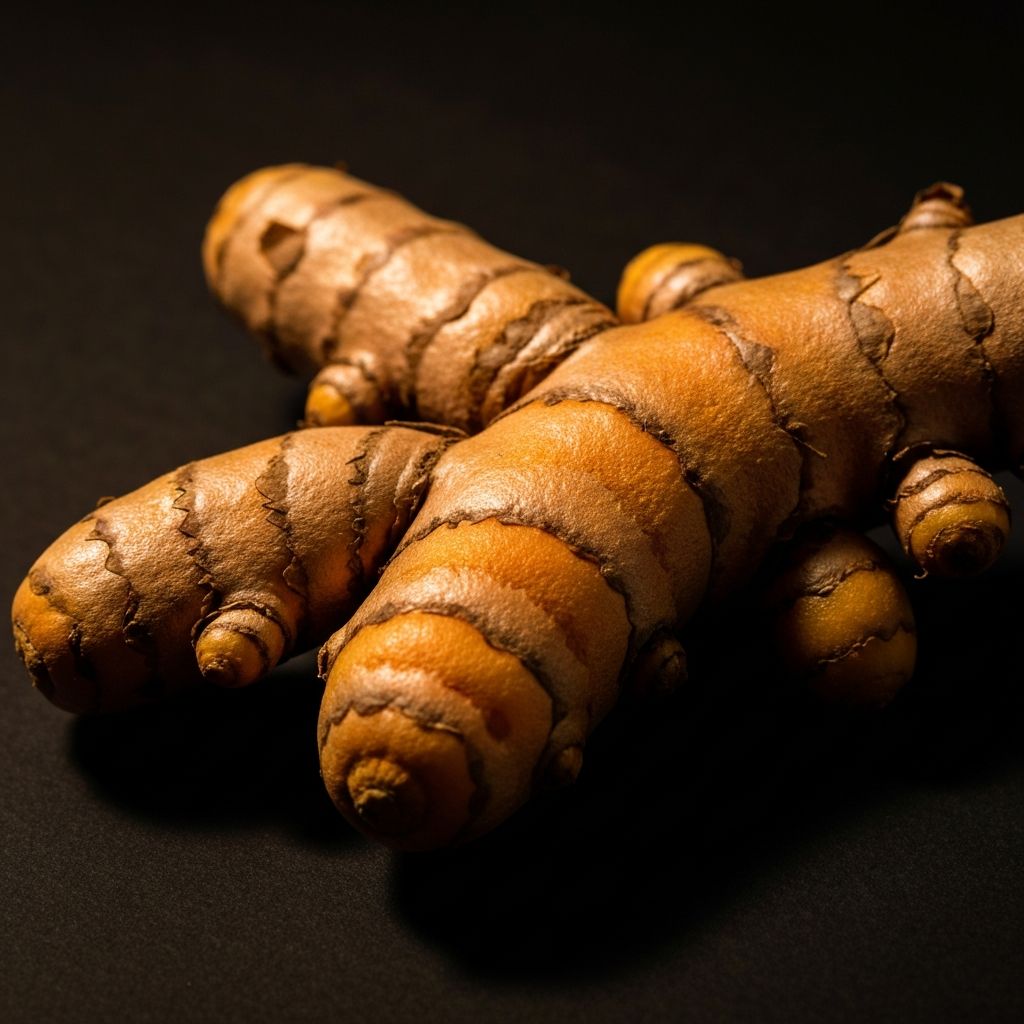
Turmeric has been used in traditional medicine systems, particularly in Ayurveda and Traditional Chinese Medicine, for over 4,000 years. The root has been valued for its distinctive properties and appearance.
Modern scientific investigation began in the 19th and 20th centuries when researchers started isolating and studying the compound responsible for turmeric's golden color and biological properties: curcumin.
Understanding Curcumin
Molecular Structure & Properties
Curcumin is a polyphenolic compound that comprises approximately 2-8% of turmeric by weight. It is known for its antioxidant and anti-inflammatory properties.
Scientific literature extensively documents curcumin's interactions with various biological pathways. Research examines how it may support the body's natural regulatory systems.
Bioavailability Considerations
Curcumin's absorption in the body is relatively limited when consumed alone. This has led to research on delivery methods and combination approaches to enhance its bioavailability.
Scientific Research
Anti-Inflammatory Mechanisms
Scientific studies investigate how curcumin may interact with inflammatory pathways at the cellular level, potentially supporting the body's natural inflammatory response systems.
Antioxidant Activity
Curcumin exhibits antioxidant properties in laboratory and animal model studies. Research explores its potential to support cellular defense systems against oxidative stress.
Cellular Studies
In vitro and animal model research provides insights into curcumin's biochemical actions. These studies form the foundation for understanding its potential mechanisms of action.
Traditional Preparation Methods
In traditional systems, turmeric is often combined with other ingredients and consumed with fat or black pepper to enhance absorption. These traditional preparation methods reflect centuries of empirical knowledge.
Black pepper contains piperine, a compound that scientific research suggests may enhance curcumin absorption, potentially demonstrating the wisdom of traditional combinations.
Continue Reading
Educational Information
This article presents scientific information about turmeric and curcumin for educational purposes only. It does not constitute medical advice or recommendations. Individual responses to dietary ingredients vary. Consult a healthcare provider before incorporating new ingredients into your routine.
Not a medicinal product. Consult a doctor before use.